Bahasa Indonesia
 English

Product Evaluation and Validation Mark the Closing of the ICCLR Batch 1 Multimedia Workshop
Submitted by irfan on Thu, 08/06/2026 - 00:00

YOGYAKARTA – The series of the Cognitive Load-Based Multimedia Workshop Batch 1 officially reached its culmination on Thursday (August 6, 2026). Held at the Master’s and Doctoral Building of the Faculty of Mathematics and Natural Sciences (FMIPA), Universitas Negeri Yogyakarta (UNY), the final session focused on the evaluation, validation, and final refinement of the educational multimedia products developed by the participants, particularly undergraduate students.
The activity began with comprehensive guidance from the Director of ICCLR, Endah Retnowati, Ph.D. She once again emphasized the importance of applying the principles of Cognitive Load Theory (CLT) in multimedia development. During the session, participants received specific guidance on crucial aspects that needed to be addressed to ensure that the resulting media could effectively facilitate students’ cognitive processes.
.jpeg)
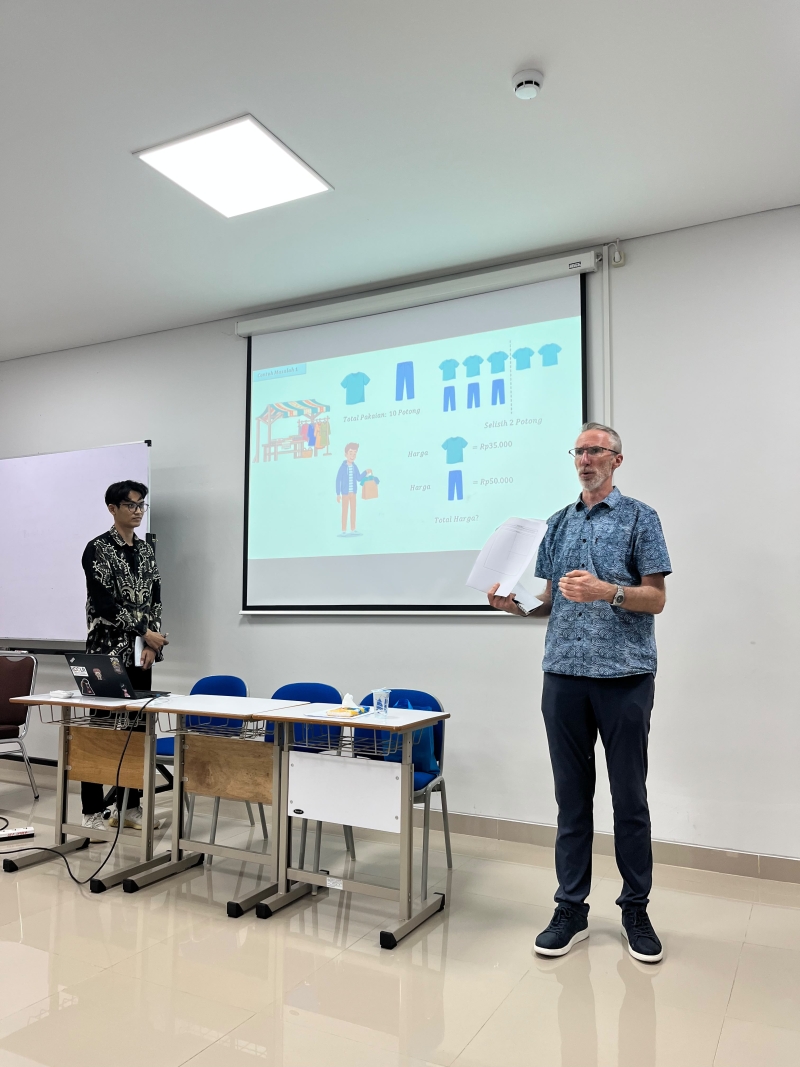
The agenda then proceeded to the product presentation session. The undergraduate students took turns presenting the educational multimedia prototypes they had developed since the first day of the workshop. In their presentations, each participant demonstrated the concept, interface design, and interactive features of their multimedia products as a tangible implementation of the instructional theories they had learned.
The product validation stage was particularly significant as it was conducted directly by an international expert from The University of Sydney, Assoc. Prof. Paul Ginns, Ph.D., together with Endah Retnowati, Ph.D. Both experts provided highly constructive feedback and critical insights. Particular attention was given to visual layout, the flow of content presentation, and the accuracy of CLT implementation to prevent excessive cognitive load on media users.
Following the validation process, participants were directed to immediately implement the evaluation notes during the product finalization stage. Intensive discussions focused on tactical steps for refining the designs. The series of the Cognitive Load-Based Multimedia Workshop Batch 1 was officially concluded, leaving high hopes that the participants’ competencies will continue to develop and contribute to the creation of scientific, inclusive, and relevant learning media aligned with students’ cognitive architecture.
Akreditasi

Sertifikat akreditasi dapat diunduh disini
Kontak Kami
Program Studi Pendidikan Matematika
(Gedung Baru FMIPA lt III depan Masjid Mujahidin Karangmalang)
FMIPA Universitas Negeri Yogyakarta
Kampus Karangmalang Yogyakarta 55281
email: pmatematika@uny.ac.id